People
Current or recent lab members
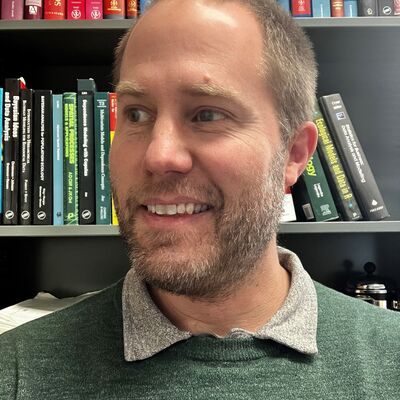
Daniel C. Reuman
Dan is interested in quantitative approaches to biological questions. He is currently focused on aspects of species distribution modelling, topics in metapopulation and community synchrony, and crop yield forecasting. Dan was a James S McDonnell Foundation Complex Systems Scholar and a Humboldt Research Award winner.
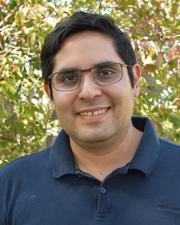
Angel Robles
Angel researches species niche and distribution modelling using stochastic demography. His past work includes wildlife disease susceptibility, population genetics, and species interactions.
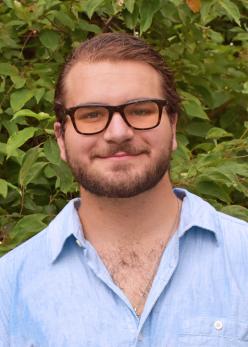
Nat Coombs
Nat is conducting diverse synchrony research including human death time series, fish movement synchrony in California rivers, and remote-sensed vegetation signals.
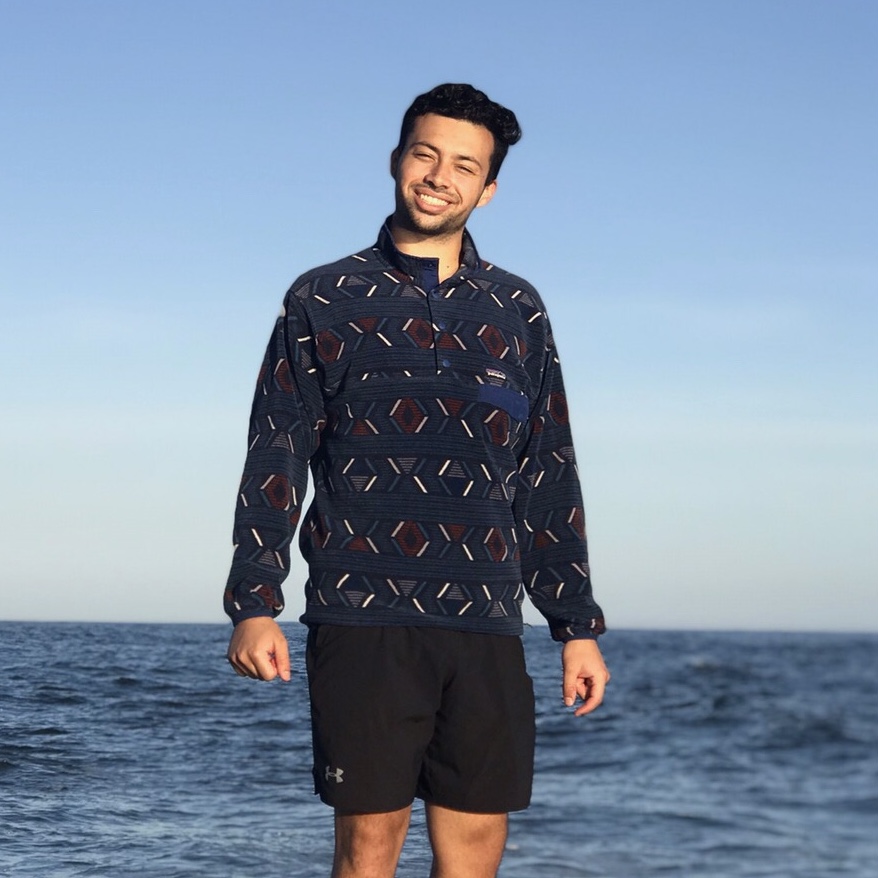
Ethan Kadiyala
Ethan is a PhD candidate in the Castorani lab at the University of Virginia. He has a long-standing collaboration with the Reuman lab and a fellowship co-mentored by Dan.
Vadim Karatayev
Vadim is completing projects related to resilience. He was an NSF Postdoctoral Fellow with the lab and is now William J. Higgins Endowed Assistant Professor at the University of Maryland.
Onofrio Mazzarisi
Onofrio is completing projects on diversity-stability relationships and sub-linear population growth self-limitation. He moved to a postdoctoral position at the National Institute of Oceanography and Applied Geophysics / International Center for Theoretical Physics in Trieste, Italy; and later obtained a Marie Curie Fellowship and a French CNRS position in Montpellier.
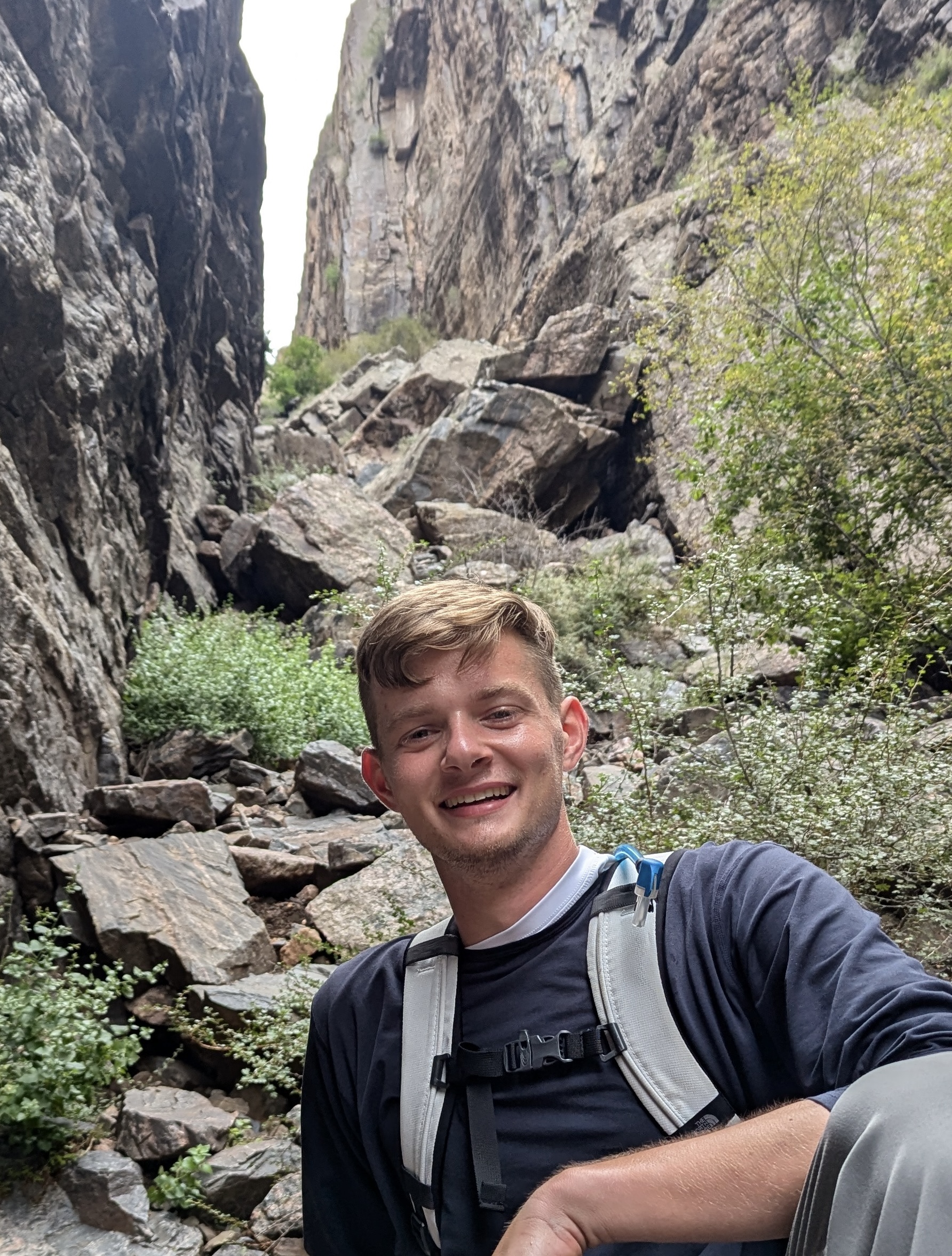
Chase Horner
Chase worked on machine learning approaches to crop yield forecasting. He worked with Dan to build out prototype models capable of useable 20m-resolutionn predictions. He was accepted into a masters program in data science at the University Virginia.
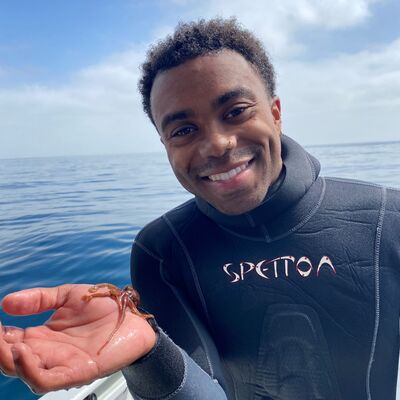
Deidric Davis
Deidric was an REU student through the Coastal-Heartland Marine Biology Exchange, which Dan co-led. Deidric is a marine ecologist and scientific communicator with a B.S. in Marine Science and a B.A. in Animal Studies from Eckerd College. He hosts the Black Nerds Matter podcast on WMNF. He was accepted into a PhD program at Stanford.
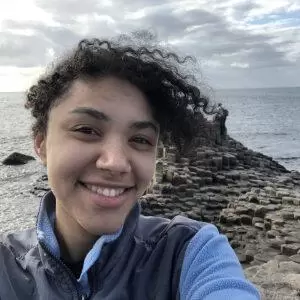
Aleyna Loughran-Pierce
Aleyna was an REU student through the Coastal-Heartland Marine Biology Exchange, which Dan co-led.
Fernando Miguelena
Fernando was an REU student through the Coastal-Heartland Marine Biology Exchange, which Dan co-led.
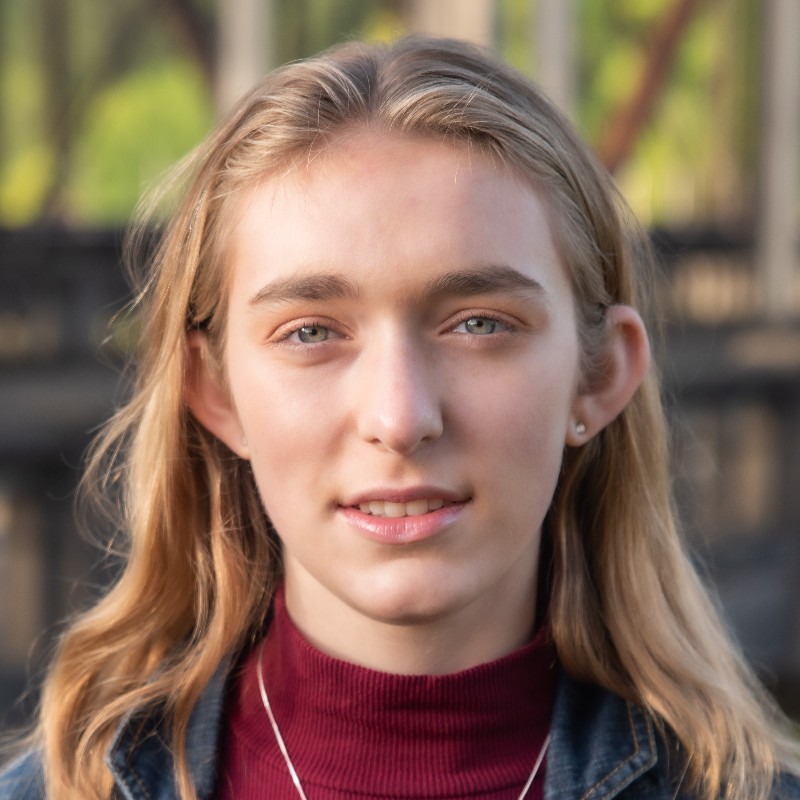
Sela Raisl
Sela was an REU student through the Coastal-Heartland Marine Biology Exchange, which Dan co-led.
Past postdocs
Daniel R. O'Donnell
Danny was a postdoc with Andrew Rypel at UC Davis, affiliated with the Reuman lab. He worked on freshwater fish movement in California using telemetry, including synchronous movement. He then became Senior Environmental Scientist at the California Department of Fish and Wildlife Water Branch.
Scott Colborne
Scott was a postdoc with Andrew Rypel at UC Davis, affiliated with the Reuman lab, working on fish movement synchrony in California using telemetry. He then became a Research Scientist at the Quantitative Fisheries Center, Michigan State University.
Lawrence Sheppard
Lawrence led some of our work on wavelet approaches to synchrony which later became the foundation for one of our main lines of inquiry. He later took up a permanent researcher position at the UK Marine Biological Association.
Shyamolina Ghosh
Shyamolina applied copula statistical concepts to ecological and environmental datasets, developing one of our main approches to synchrony. She moved to a postdoctoral position in Switzerland and later became Assistant Professor at the Indian Statistical Institute in Kolkata.
Lei Zhao
Lei is interested in population dynamics in food webs and ecological applications of complex network theory, and the effects of warming on aquatic communities. In the lab he worked on spatial synchrony, Taylor's law, phytoplankton synchrony in the California Current, and the determinants of the slope of Taylor's law. He then became an Associate Professor in Beijing at the China Agricultural University.
Tom Anderson
In the lab, Tom worked on spatial synchrony across taxa including freshwater plankton, deer, and amphibians. He later became Associate Professor at Southern Illinois University.
Jonathan Walter
While in the lab, Jon worked on geographic approaches synchrony (which then became the foundation of a research line in the lab), and the impacts of climate variability on insect outbreaks. He later became a permanent researcher at UC Davis.
Brandon Mechtley
Brandon studied theoretical models of synchrony propagation through trophic networks across space and timescales. His background spans multimedia information retrieval, computer music synthesis, and acoustic ecology. He later took up a permanent research position at the University of Arizona.
Past PhD students
Georgina Adams
Georgina's PhD (2015) examined community structure in aquatic systems, with a focus on spatial and temporal trends in size-based metrics and the effects of climate on body size. Her background spans mathematics, evolutionary biology, and ecology. Dissertation: Biogeography of marine communities: beyond food webs and the abundance spectrum.
Emma Defriez
Emma's PhD (2016) focused on global patterns of metapopulation synchrony in primary producers and climate-driven synchrony changes. She worked with Lawrence Sheppard and Chris Reid from SAHFOS, drawing on the Continuous Plankton Recorder database and satellite data. Dissertation: Synchrony in marine plankton metapopulations and the effects of climate.
Bernardo Garcia-Carreras
Bernardo's PhD (2012) aimed to improve understanding of how populations respond to anthropogenic environmental change. He provided some of the first empirical evidence linking the spectral colour of environmental and population fluctuations, and used models to address whether climate-change alterations in means or variances matter more for population dynamics. He then became a permanent researcher at the Centre for Environment, Fisheries, and Aquaculture Science. Dissertation: The global effects of climate change on population dynamics.
Lawrence Hudson
Lawrence's PhD (2012) examined the relationship between the dynamics and structure of complex multi-trophic communities. He produced the R package cheddar for community analysis, which has been widely used since. He also worked on body-mass scaling of field metabolic rates in birds and mammals. Lawrence then moved to a permanent research position at the Natural History Museum, London.
Lisa Signorile
Lisa's PhD (2014) investigated the genetic determinants of American grey squirrel invasiveness in Europe, finding that low genetic diversity correlated with reduced spread propensity and that long-distance human translocations drove fast European spread. Her interests were in the ecology and population genetics of small mammals and vertebrates, and in science communication. Dissertation: Ecological and genetic determinants of the expansion of grey squirrel populations in Italy and Britain.
Julieta Decarre
Julieta's PhD (2015) examined how agricultural practices and land-cover changes affect wildlife persistence in the semiarid Chaco region. She is a field biologist who implements monitoring designs like camera traps. She previously worked at the National Institute of Agricultural Technology of Argentina (INTA) developing strategies that balance food production and conservation. Dissertation: Diversity and structure of bird and mammal communities in the semiarid Chaco region: response to agricultural practices and landscape alterations.
Drew Wilson
Drew was a joint PhD student between the Reuman group and Tom Bell at Imperial College London, and transferred fully to Tom's lab when Dan left Imperial.
Past masters students
Adeola Adeboje. Cross environmental variable synchrony.
James Chris Terry. Detecting signatures of physiology in dynamics: direct tests of allometrically parameterized food web models. Became a PhD student at Oxford University.
Simon Mills. Measuring histories of habitat fragmentation using terrageny metrics offers fresh insight into fragmented landscapes. Became a PhD student at the University of Sheffield.
Yaodong Yang. Dispersal and island biogeography. Primary supervisor: James Rosindell. Became a PhD student at the University of Southampton.
Laura Nunes. Potential trends in the sensitivity of long-term growth rate to changes in the mean and standard deviation of environmental conditions. Became a PhD student at University College London.
Melissa Guzman. The inflationary effects of temporal autocorrelation provide persistence in multi-trophic sink metacommunities. Became a PhD student at McGill University.
Paul Rassell. Replicability of ecological community dynamics and the measures which characterize them: a study of innate variability in real and simulated communities. Became a PhD student at Imperial College London.
Shiyu Li. On the relative importance of changes in the mean and variability of climatic signals for the long-term stochastic growth rate of an age-structured population.
Rosemary Moorhouse-Gann. An American invasion: the origins, genetic diversity, and population structure of the American grey squirrel in Cumbria. Became a PhD student at the University of Cardiff.
Harkiran Bhogal. Temperature and optimal swimming speed in fish.
Sean Webber. Reconstructing the rise and demise of two squirrel species in Great Britain: testing the role of forest cover.
Dimitrios Nerantzis. Predicting imposed chaos in the population dynamics of an insect species. Became a PhD student at Imperial College London.
Guo-Heng Chin. Abundance-occupancy relationships in deep-sea fish species. Primary supervisor: Julia Blanchard.
Georgina Adams. Body size and species composition of diatoms in Icelandic streams. Became a PhD student at Imperial College London, where she later completed her PhD in the lab.
Yangchen Lin. The link between maximum likelihood and the forecast accuracy of mechanistic population models. Won the Gerald Durrell award for best thesis in his MSc year. Became a PhD student at Cambridge University.
Yesim Dodlani. Spatial and temporal scaling of the abundance spectrum.
Carmen Suriel-Melchor. The effects of climate change on bird population dynamics in North America.
Silvia Antonelli. Modeling the eco-evolutionary dynamics of a temperature-dependent consumer-resource system. Primary supervisor: Tim Barraclough.
Oliver Wearn. Extinction debt in the Brazilian Amazon. Oliver's master's thesis work was eventually published in Science. Became a PhD student at Imperial College London.
Lawrence Hudson. Dynamics of complex food webs: empirical verification of models. Became a PhD student at Imperial College London, where he later completed his PhD in the lab.
Yajun Sun. Distributions of average species body masses in local community food webs. Became a PhD student at the University of Toronto.
Past undergraduate research students
Noah Pyle. Coastal-Heartland Marine Biology Exchange REU student. University of Kansas, Woods Hole Oceanographic Institute, and Kalamazoo College.
Edgar Nickols. Coastal-Heartland Marine Biology Exchange REU student. University of Kansas, Woods Hole Oceanographic Institute, and Haskell Indian Nations University.
Miriam Wanner. The geography of synchrony of giant kelp. University of Virginia.
Isaiah Erb. The influence of topography on the geography of synchrony of terrestrial vegetation. University of Kansas.
Jasmin Albert. Storage effects and tail associations. University of Kansas.
Thomas Gartman. Geography of synchrony of terrestrial vegetation in urban areas. University of Kansas.
Noah Mohabbat. University of Kansas.
Madeleine Muller. University of Kansas.
Carter Pilch. Synchrony of five common amphibian species in Minnesota. University of Kansas.
Goma Karki. University of Kansas. Jon Walter was primary supervisor.
Jacob Peterson. Relationships between patterns of synchrony in taxonomically and ecologically similar species in the North Sea. University of Kansas.
Emilie Tarouilly. Environmental drivers of global synchrony in phytoplankton. Imperial College London.
Richard Clifton. Can extinctions be predicted after anthropogenic perturbations to ecosystems? Imperial College London.
Jonathan Chan. Competition and the effects of temperature. Imperial College London.
Sean Jordan. Competition and the effects of temperature. Imperial College London.
Alexander Kazhdan. Predicting extinctions in food webs. Imperial College London.
Lucy Li. The predictive power of R* in a two-predator one-prey Lotka-Volterra model. Imperial College London.
Timothy Saunders. What are the most important questions in ecology for the 21st century? Imperial College London.
Ryota Nakamura. Murder rates are higher when the weather is warmer. Imperial College London.
Andrew Brockman. Are top predators really on top? Imperial College London.
Feng Wang. Confidence intervals for population viability analysis. Imperial College London.
Thomas Britton. Latitudinal biodiversity gradients. Imperial College London.
Edward Stephens. An unwritten future: defining the global water shortage and the multidimensional crisis facing China's national security. Imperial College London.
Cai GoGwilt. Population models with mechanistic stochasticity. Rockefeller University, New York.
Daniella Schittler. Emergent properties of tri-trophic interactions and food chains in food webs with abundances and body masses. Rockefeller University, New York.